A sonic exploration and tonal analysis of contemporary creative music in a myriad of improvisational/composed settings, textures, and expressions.
Welcome to Sound Projections
I'm your host Kofi Natambu. This online magazine features the very best in contemporary creative music in this creative timezone NOW (the one we're living in) as well as that of the historical past. The purpose is to openly explore, examine, investigate, reflect on, studiously critique, and take opulent pleasure in the sonic and aural dimensions of human experience known and identified to us as MUSIC. I'm also interested in critically examining the wide range of ideas and opinions that govern our commodified notions of the production, consumption, marketing, and commercial exchange of organized sound(s) which largely define and thereby (over)determine our present relationships to music in the general political economy and culture.
Thus this magazine will strive to critically question and go beyond the conventional imposed notions
and categories of what constitutes the generic and stylistic definitions of ‘Jazz’, ‘classical music’, ‘Blues.’
'Rhythm and Blues’, ‘Rock and Roll’, ‘Pop’, ‘Funk’, ‘Hip Hop’, etc. in order to search for what individual
artists and ensembles do creatively to challenge and transform our ingrained ideas and attitudes of what
music is and could be.
So please join me in this ongoing visceral, investigative, and cerebral quest to explore, enjoy, and pay
homage to the endlessly creative and uniquely magisterial dimensions of MUSIC in all of its guises and expressive identities.
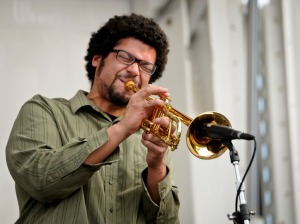
Josh Evans, born and raised in Hartford, CT, was drawn to the trumpet
after hearing a Roy Eldridge and Dizzy Gillespie recording at the age of
10. Josh began studying with Raymond ‘Dr. Rackle’ Williams and within a
year he began performing regularly with Dr. Rackle’s Sound Griot Brass
Band. By the age of 14 Evans’ musical career began to take shape when he
started to study with and be mentored by the celebrated alto
saxophonist/composer, and educator Jackie McLean. Studying under McLean
who shared the bandstand with Miles Davis, Charlie Parker, and Art
Blakey, would be pivotal in Josh's career. The experience would blaze
the path for performances with Jackie McLean which included New York
based venues known as the Blue Note, Iridium, the Regattabar located in
Boston, MA, and the Bushnell Center for Performing Arts in Hartford, CT.In
April 2005 Josh began a Three and a half year stint with the Winard
Harper Sextet, touring the United States performing and conducting
master classes. The group personnel, at different points, consisted of
Billy Taylor, Frank Wess and George Cables, as well as trumpet players
Terrell Stafford, Claudio Roditi and Phillip Harper. The group would
also record a wonderful album in 2006, entitled ‘Make it Happen’ for
Piadrum Records. In April 2007, Josh was invited to perform a two week
tour of Siberia with master saxophonist, and composer Benny Golson. It
was during this time period that Evans would also start performing with
master Drummer Rashied Ali and would become the bands trumpet player for
the next two years. The Rashied Ali Quintet toured 18 different
countries and recorded one CD Live in Europe. Josh Evans would play with
Rashied Ali until the drummer’s untimely death in 2009. In January
2011, Josh Evans recorded and released his debut album ‘Portrait’. This
Album shares Evans influential relationships with Rasieid Ali, Jackie
McLean, Raymond Williams, Alan Palmer, and Ralph Peterson.
JOSH EVANS, born and raised in Hartford, CT, was drawn to the trumpet after hearing a Roy Eldridge and Dizzy Gillespie recording at the age of 10. Josh began studying with Raymond ‘Dr. Rackle’ Williams and within a year he began performing regularly with Dr. Rackle’s Sound Griot Brass Band. By the age of 14 Evans’ musical career began to take shape when he started to study with and be mentored by the celebrated alto saxophonist/composer, and educator Jackie McLean. Studying under McLean who shared the bandstand with Miles Davis, Charlie Parker, and Art Blakey, would be pivotal in Josh's career. The experience would blaze the path for performances with Jackie McLean which included New York based venues known as the Blue Note, Iridium, the Regattabar located in Boston, MA, and the Bushnell Center for Performing Arts in Hartford, CT.
In April 2005 Josh began a Three and a half year stint with the Winard Harper Sextet, touring the United States performing and conducting master classes. The group personnel, at different points, consisted of Billy Taylor, Frank Wess and George Cables, as well as trumpet players Terrell Stafford, Claudio Roditi and Phillip Harper. The group would also record a wonderful album in 2006, entitled ‘Make it Happen’ for Piadrum Records. In April 2007, Josh was invited to perform a two week tour of Siberia with master saxophonist, and composer Benny Golson. It was during this time period that Evans would also start performing with master Drummer Rashied Ali and would become the bands trumpet player for the next two years. The Rashied Ali Quintet toured 18 different countries and recorded one CD Live in Europe. Josh Evans would play with Rashied Ali until the drummer’s untimely death in 2009. In January 2011, Josh Evans recorded and released his debut album ‘Portrait’. This Album shares Evans influential relationships with Rasieid Ali, Jackie McLean, Raymond Williams, Alan Palmer, and Ralph Peterson.
Evans has performed in the bands of:
Jackie McLean Cedar Walton Rashied Ali Oliver Lake Benny Golson Freddie Redd Billy Harper Charles Tolliver Rene McLean Curtis Fuller Grachan Moncur III Rufus Reid Christian McBride
Bobby Watson Charlie Persip Muhal Richard Abrams
David Murray Ralph Peterson "Kuumba" Frank Lacy Joe Chambers Bob Mover
Roy Hargrove Jimmy Greene Winard Harper Jesse Davis Harold Mabern David Schnitter Warren Smith Gregory Porter Shelia Jordan T.S. Monk Sam Newsome Vincent Herring
And Has Recorded with
Rashied Ali Kenny Barron Abraham Burton George Cables Bob Cranshaw Joe Chambers Ed Cherry Don Braden Dwayne Burno Steve Davis Mike DiRubbo Wayne Escoffery Wycliffe Gordon Bill Evans (sax) Orrin Evans Calvin Hill Craig Handy Winard Harper Willie Jones Victor Lewis Curtis Lundy Brian Lynch Gracchan Moncur III Bob Mover Eric McPherson Tyler Mitchell Lewis Nash Sheila Jordan Victor Jones Mark Turner Dave Shnitter Steve Williams
Rudy Walker Anthony Wonsey
Welcome to JOSH EVANS' Official Website Trumpeter, Composer, Arranger, and Educator
Now offering online lessons in Trumpet, theory, composing and Arranging
"In The Tradition" is now available
exclusively here!! and features Stacy Dillard, Frank Lacy, Theo Hill,
Dezron Douglas, Ameen Saleem, Ralph Peterson, Chris Beck. With guest
spots by Louis Hayes, Joe Ford, Christian McBride, Mike DiRubbo, David
Bryant, Rahsaan Carter, Lummie Spann, Mark Whitfield Jr and Joel Ross
New Brunswick Jazz Project Bringing Great Jazz to Central Jersey
Seven Questions with Trumpeter Josh Evans
1) If you could only own one CD, what would it be?
Absolutely Art Blakey “Free for All”, the intensity on this
recording is beyond belief. All I have to say about this is Art Blakey,
Wayne Shorter, Freddie Hubbard, Curtis Fuller, Cedar Walton, And Reggie
Workman WOOOOOO!!! It’s also interesting that this band recorded a few
other tunes on that day that never got released, some with a singer. It
would be amazing to hear that.
In all honesty it’s not fair to ask me to name just one
recording, I’m a dedicated student of this music and for sure have
checked out just about every single musician you could ever possibly
name, current and classic.
So that being said there are quite a bit of recordings that are
very special to me. Jackie McLean “Bout Soul” features the absolute two
biggest influences on my playing, Jackie McLean and Rashied Ali. I knew
Mr. Mclean since I was a little kid, even before I really played the
trumpet, and I was very fortunate to perform with him quite a bit and to
get a lot of lessons with him. Rashied was a good friend and I played
in his band the last 3+ years of his life. He took me to 20 or so
countries and before one of these tours (probably 2008) he smiled at me
and said “josh, I have something for you that you are going like” he
went back in his building and emerged with a cd. “Bout Soul”, I listened
to this recording all the way to wherever it was in Europe we were
going first. It really messed my head up!! I remember going past his
seat with my headphones on and saying to Rashied, What the @$&! Is
this, this is amazing. Rashied, Jackie, and another guy who gave me
quite a bit of work when I was in need of it, Grachaan Moncur!! Wow!!
Such an amazing record, so open. There’s much more to this story but I
don’t think there is enough space here to tell it.
And one more, In this time of violence, hostility, gigs that
don’t pay ANY money and crowded, noisy subways, musicians are in need of
tranquillity and peace. And the record that gives me the most peace,
(actually I’m listening to this as I write this) is Shirley Horn’s “May
the music never end” absolutely the most beautiful recording I have ever
heard. Nothing can calm me down as much as this does. Such and elegant
lady, her phrasing is a very big influence on my playing.
2) What’s your favorite non-jazz tune?
“A Change is Gonna Come,” the Sam Cooke version.
3) What would you want to be if you weren’t a musician?
Anything where I would be rich! I could really use two, tree million dollars.
4) What would you NOT want to be?
Broke, homeless, sick and alone
5) If you were about to have your last meal, what would it be?
If it was my last meal I don’t think it would really matter.
Anything really, I’d probably drink a bottle of Lagavulin with a side
order of Heineken and fade away into the abyss
6) What living musician do you admire most? Why?
Mccoy Tyner, he changed the concept of the piano when he was
still very young. But he did it the right way. He was a childhood friend
of Richie Powell who was Bud Powell’s younger brother. To me, the
modern music of today comes through Bud and Monk and their associates
like Elmo Hope, Sadik Hakim and Tadd Dameron. and then through people
like Sonny Clark Walter Davis Jr. and Bobby Timmons. Mccoy was very
schooled in that type of playing so much that he changed it up
completely with those open chords, those strong left handed Root-fifth
bombs and moving chords around in anyway he saw fit to create and
release tension. One of my greatest musical experiences was playing “Fly
With The Wind” with Mccoy and Gary Bartz. I still have yet to hear that
sound come out of any piano or player. When he hit that first chord,
the heavens opened up!!
7) What’s the last book you read?
The last book I finished was “Seize the Time” by Bobby Seale. I
have read the majority of other books for research on different topics
since then but haven’t finished them
Josh
Evans, whose playing makes one always want to hear more of him,
releases his third albums as a leader. The trumpet player, which can be
regularly heard at Small Jazz Club, one of the temples of the young and
bursting jazz scene in New York, puts on a showcase of his compositional
capabilities.
PERSONNEL:
JOSH EVANS, trumpet BRUCE WILLIAMS, alto sax, tenor sax DAVID BRYANT, piano RASHAAN CARTER, bass ERIC McPHERSON, KUSH ABADEY, drums
TRACKS:
01. Steps 02. Lake Superior 03. Bad Dream 04. Prayer for the Innocent 05. Good Mornin 06. So Long Sterling 07. Hope and Despair 08. Clark Street 09. Chronic Mistakes 10. Gone but Not Forgotten 11. 1984 12. Nji Lule
THE
MUSIC OF JOSH EVANS: AN EXTENSIVE VIDEO OVERVIEW, A CROSS SECTION
OF RECORDINGS, MUSICAL ANALYSIS AND COMMENTARY, PLUS VARIOUS INTERVIEWS
WITH JOSH EVANS:
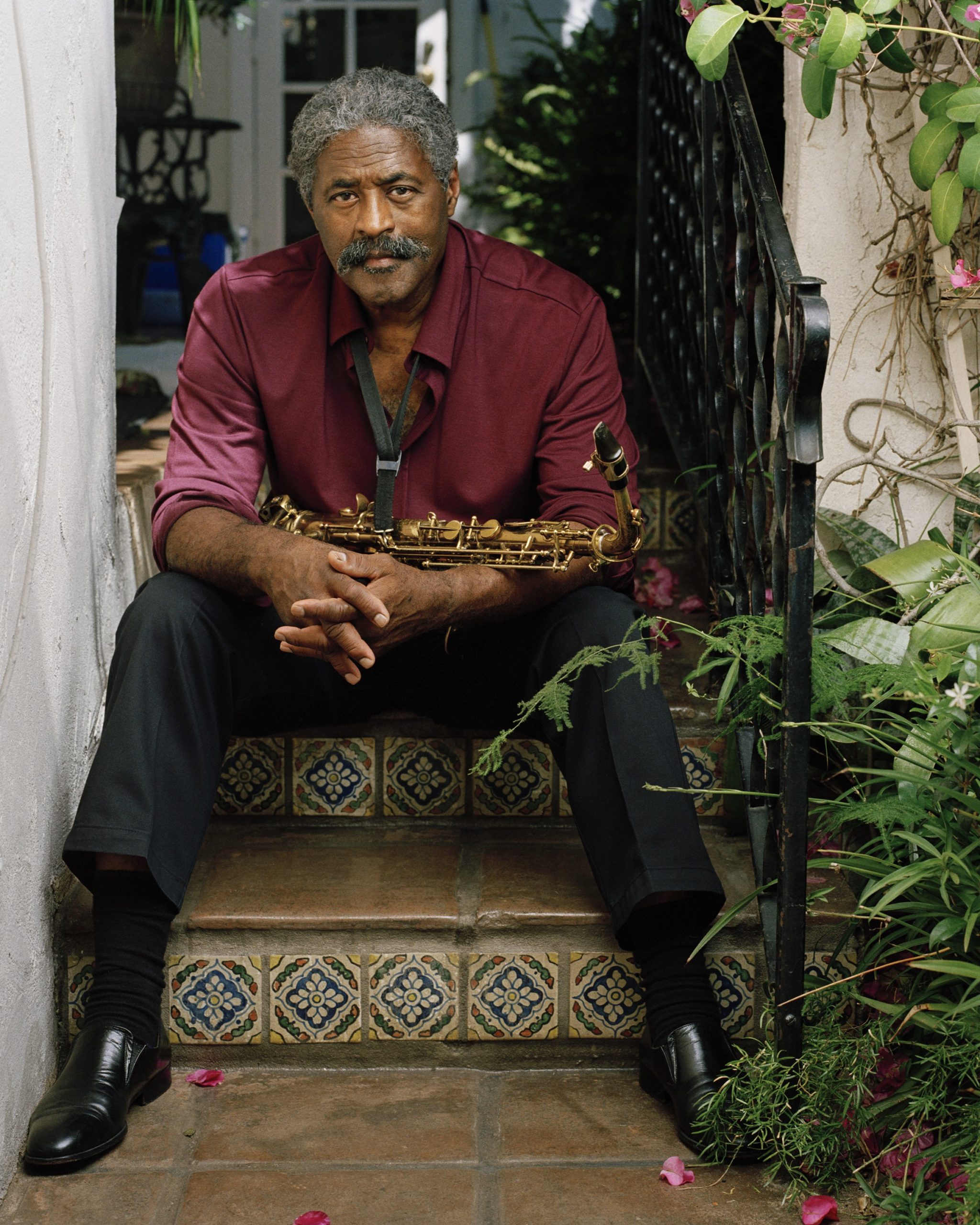
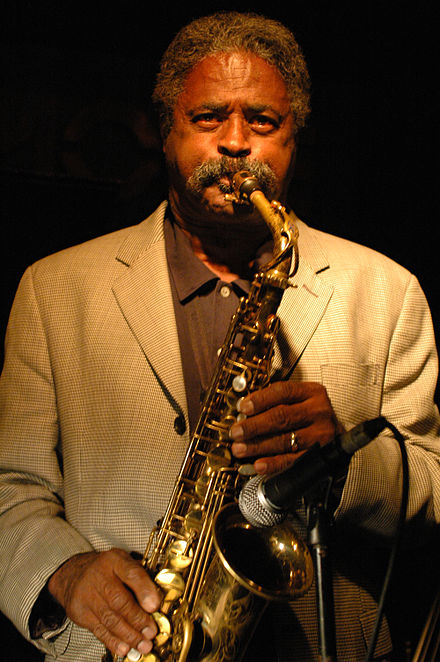
A Charlie Parker
disciple who brings his own lyricism to the bebop language, Charles
McPherson has been a reliable figure in modern mainstream jazz for more
than 35 years. He played in the Detroit jazz scene of the mid-'50s,
moved to New York in 1959, and within a year was working with Charles Mingus. McPherson and his friend Lonnie Hillyer succeeded Eric Dolphy and Ted Curson as regular members of Mingus' band in 1961 and he worked with the bassist off and on up until 1972. Although he and Hillyer
had a short-lived quintet in 1966, McPherson was not a full-time leader
until 1972. In 1978, he moved to San Diego, which has been his home
ever since and sometimes he uses his son, Chuck McPherson, on drums.
Charles McPherson, who helped out on the film Bird by playing some of
the parts not taken from Charlie Parker
records, has led dates through the years for Prestige (1964-1969),
Mainstream, Xanadu, Discovery, and Arabesque.
“….the original music had me
entranced. Magnificent sounds somewhat inadequate! I doubt there will be
a better album released this year. It is just so listenable, so
danceable, so everything …”
Bebop luminary Charles McPherson explores the exciting relationship between jazz and dance art-forms on his new project, Jazz Dance Suites, due out September 25 via Chazz Mack Music.
by George Varga, Union Tribune September 2019 Wynton
Marsalis, a long time admirer says: “Charles is the very definition of
excellence in our music. He’s the definitive master on his instrument.
He plays with exceptional harmonic accuracy and sophistication. He
performs free-flowing, melodic and thematically developed solos with
unbelievable fire and an unparalleled depth of soul.” Read the story here.
The enchanting “Jazz Dance Suites”
by George Varga, Union Tribune October 10, 2020
Internationally acclaimed saxophonist Charles McPherson is not the
first jazz great to launch his own record label, perform a livestreamed
concert or teach music classes online. But he is surely the first to do
all three at the age of 81. And he is very likely the first octogenarian
artist in any genre who is set to promote his new album with a drive-in
concert. More…
Re-issue of “Illusions in Blue”
“McPherson has not merely remained true to his bop origins but
has expanded on them, both as improvising soloist and as composer. . .
.his sound bold and full, he brought his own values to three of his
original pieces: “Horizons,” with its shifting moods; “Illusions in
Blue,” a sort of 21st Century variation on the blues with archly
ingenious piano chording and the rich, almost lushly evocative “A Tear
and a Smile.” Having thus displayed his dual talents as composer/player,
McPherson then felt free to tear into “Cherokee” at a breakneck pace.”Leonard Feather-Los Angeles Times
Charles McPherson was born in Joplin,
Missouri and grew up in Detroit . He studied with the renowned pianist
Barry Harris and started playing jazz professionally at age 19. He moved
from Detroit to New York in 1959 and performed with Charles Mingus from
’60 to ’72, also collaborating frequently with Harris, Lonnie Hillyer
(trumpet), and George Coleman (tenor sax). Read more about Charles >>
Charles McPherson was born in Joplin, Missouri and moved to Detroit
at age nine. After growing up in Detroit, he studied with the renowned
pianist Barry Harris and started playing jazz professionally at age 19.
He moved from Detroit to New York in 1959 and performed with Charles
Mingus from 1960 to 1972. While performing with Mingus, he collaborated
frequently with Harris, Lonnie Hillyer (trumpet), and George Coleman
(tenor sax).
At a Larry Vuckovich record date in San Francisco, 1985
Mr. McPherson has performed at concerts and festivals with
his own variety of groups, consisting of quartets, quintets to full
orchestras. Charles was featured at Lincoln Center showcasing his
original compositions 15 years ago, and once again joined Wynton
Marsalis and J@LC Orchestra in April, 2019 honoring his 80th Birthday
where they arranged and performed 7 of Charles’ iconic original
compositions.Charles has
toured the U.S., Europe, Japan, Africa and South America with his own
group, as well as with jazz greats Barry Harris, Billy Eckstine, Lionel
Hampton, Nat Adderly, Jay McShann, Phil Woods, Wynton Marsalis, Tom
Harrell, Randy Brecker, James Moody, Dizzy Gillespie, and others.
Charles and Mike Wofford during a San Diego gig in the late 80s
McPherson has recorded as guest artist with Charlie Mingus, Barry
Harris, Art Farmer, Kenny Drew, Toshiko Akiyoshi, the Carnegie Hall Jazz
Orchestra, and the Lincoln Center Jazz Orchestra with Wynton Marsalis.
He has recorded as a leader on Prestige, Fantasy, Mainstream, Discovery,
Xanadu, Arabesque, Capri and several smaller labels in Europe and
Japan.
Charles was the featured alto saxophonist in the Clint
Eastwood film “Bird,” a biopic about Charlie Parker. Charles has
received numerous awards, including the prestigious Don Redman Lifetime
Achievement Award and an Honorary Doctor of Fine Arts from California
State University San Marcos. Charles performed this past April at the
NEA Jazz Master’s 2019 performance during Stanley Crouch’s tribute.Widely
recognized as a prolific composer, Charles is now Resident Composer for
the San Diego Ballet, where he has written three original suites for
chamber music and jazz combos.In the summer of 2019, Dr. Donnie Norton will compile the entire book of Charles’ compositions for publication.
McPherson remains a strong, viable force on the jazz scene
today. Throughout his six decades of being an integral performer of the
music, Charles has not merely remained true to his Be Bop origins but
has expanded on them. Stanley Crouch says in his New York Times article
on Charles, “he is a singular voice who has never sacrificed the
fluidity of his melody making and is held in high esteem by musicians
both long seasoned and young.” Charles is a frequent guest at
universities all over the world and also teaches privately.Many
of his former students have gone on to have careers of their own in
jazz, and have earned National Jazz Student Awards. Charles had the
honor of being the subject of the Ph.D. candidate Dr. Donnie Norton’s
Doctoral Dissertation: “The Jazz Saxophone Style of Charles McPherson: An Analysis through Biographical Examination and Solo Transcription.”
Charles McPherson is available internationally for Concerts,
Festivals, and Club Dates as a soloist or with The Charles McPherson
Group. Charles also offers Clinics and Master Classes.
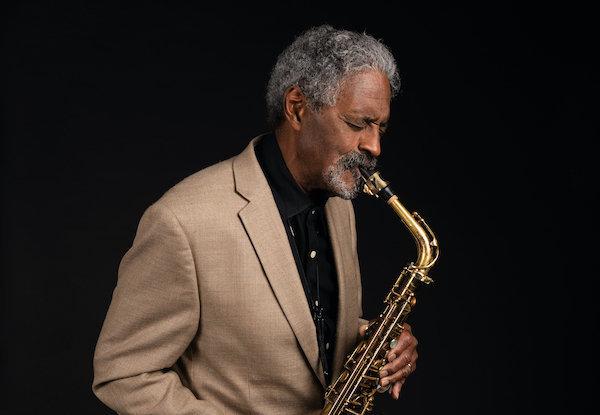
Charles McPherson (born July 24, 1939)[1] is an American jazz alto saxophonist born in Joplin, Missouri, United States, and raised in Detroit, Michigan, who worked intermittently with Charles Mingus from 1960 to 1974, and as a performer leading his own groups.[1]
McPherson also was commissioned to help record ensemble renditions of pieces from Charlie Parker, on the 1988 soundtrack for the film Bird.[1]
“McPherson’s harmonic ideas push the boundaries of bebop without breaking the mold.”
– Suzanne Lorge, Downbeat
“The bebop master is a true alto saxophonist. He plays the
instrument with fire, passion and precision. He can pull your
heartstrings with one note, and dazzle you with virtuosity and
imagination. There is only one Bird, one Stitt, one Cannonball—and one
Charles McPherson.”
– Sherman Irby, Alto Saxophonist with J@LC Orchestra
“…..McPherson is one of jazz’s most commanding altoists. Given his
undiminished improvisational prowess and his wide-ranging intellect it’s
not surprising that younger musicians often seek him out for
mentorship.”
– Andrew Gilbert, Mercury News
“…McPherson hones a personal approach to bebop’s rhythmic and
harmonic idioms that makes everything he plays sound timeless, logical,
and emotionally trenchant.”
– Andrew Gilbert - San Francisco Classical Voice
“Charles’s operatic tone on the alto soares above the ensemble. All
of the old masters know that projection comes from air, not audio
equipment.”
– Nathan Bellott
“He’s got such incredible force, and you really feel it on the
bandstand.” He’s an amazing improviser. Charles has this never-ending
reservoir of ideas.”
– Jeb Patton - piano
Charles McPherson was born in Joplin,
Missouri in 1939 and moved to Detroit at age nine. While growing up in
Detroit, he studied with the renowned pianist Barry Harris and started
playing jazz professionally at age 19.He
then moved from Detroit to New York in 1959 in order to be in the heart
of the jazz scene. McPherson soon joined bassist Charles Mingus’ band
and performed with Mingus from 1960 to 1972. While performing with
Mingus, he collaborated frequently with Harris, Lonnie Hillyer, and
George Coleman.
Mr. McPherson has performed at concerts and festivals
around the world with his own variety of groups, consisting of quartets,
quintets and full orchestras. Charles has toured the U.S., Europe,
Japan, Africa and South America with his own group, as well as with jazz
greats Barry Harris, Billy Eckstine, Lionel Hampton, Nat Adderly, Jay
McShann, Phil Woods, Wynton Marsalis, Tom Harrell, Randy Brecker, James
Moody, Dizzy Gillespie, and others. 16 years ago, Charles was featured
at Lincoln Center showcasing his original compositions, and once again
joined Wynton Marsalis and the J@LC Orchestra in April, 2019 in
celebrating the altoist’s 80th birthday. The evening’s performance
included new arrangements of 7 of Charles’ iconic, original
compositions. Finally, Charles performed in April, 2019 at the NEA Jazz
Master’s performance during Stanley Crouch’s tribute.
McPherson has recorded as a guest artist with Charlie
Mingus, Barry Harris, Art Farmer, Kenny Drew, Toshiko Akiyoshi, the
Carnegie Hall Jazz Orchestra, and the Lincoln Center Jazz Orchestra with
Wynton Marsalis. He has recorded as a leader on Prestige, Fantasy,
Mainstream, Discovery, Xanadu, Arabesque, Capri and several smaller
labels in Europe and Japan. Additionally, Charles was the featured alto
saxophonist in the Clint Eastwood film “Bird,” a biopic about Charlie
Parker.
Charles has received numerous awards, including the
prestigious Don Redman Lifetime Achievement Award and an Honorary Doctor
of Fine Arts from California State University San Marcos.
Widely recognized as a prolific composer, Charles is now
Resident Composer for the San Diego Ballet where he has written three
original suites plus two arrangements for chamber music and jazz combos.
His newest album on his own label is a compilation of two of multiple
movement suites, “Sweet Synergy Suite” and “Song of Songs,” plus a
movement from a string chamber work, “Reflection, Turmoil & Hope.” Many
critics from acclaimed publications, including DownBeat Magazine,
recognized JAZZ DANCE SUITES as one of the best Jazz Recordings of the
year. It’s also won the honor of two International Reader’s Polls – both
DownBeat and JAZZTIMES as #1 & #4 Jazz Album of the year, plus
Charles was named Artist of the Year. Read all the reviews here.
Charles was most touched by his peer’s comments. Bobby Watson said, “A
masterpiece.” John Beasley and Don Sickler both said, “I had no idea you
are such a great writer,” and many more too vast to add here. In the
summer of 2019, Dr. Donnie Norton began compiling the entire book of
Charles’ compositions for publication.
During the pandemic, Charles was as busy as ever online
participating in programs, concerts and festivals all over the world –
from the esteemed Global Music Foundation, Detroit Symphony Programs,
many jazz festivals, and a new recording coming up from Germany where he
is a soloist, and artists in residence programs from MSU to ASU.
McPherson remains a strong, viable force on the jazz scene
today. Throughout his over six decades of being an integral performer
of the music, Charles has not merely remained true to his Be Bop
origins, but has expanded on them. Stanley Crouch says in his New York
Times article on Charles, “he is a singular voice who has never
sacrificed the fluidity of his melody making and is held in high esteem
by musicians both long seasoned and young.” Wynton Marsalis, a longtime
admirer says: “Charles is the very definition of excellence in our
music. He’s the definitive master on this instrument. He plays with
exceptional harmonic accuracy and sophistication. He performs
free-flowing, melodic and thematically developed solos with unbelievable
fire and an unparalleled depth of soul.”
Charles is a frequent guest at universities all over the
world and also teaches privately. Many of his former students have gone
on to have careers of their own in jazz, and have earned National Jazz
Student Awards. Charles had the honor of being the subject of then PhD
candidate Dr. Donnie Norton’s Doctoral Dissertation: “The Jazz Saxophone
Style of Charles McPherson: An Analysis through Biographical
Examination and Solo Transcription,” and is now being extensively
interviewed by Dr. Michael Caldwell for a memoir about Charles’ life and
philosophies. numerous awards, including the prestigious Don Redman.
Charles McPherson researched what music at the time of King Solomon might have sounded like for the saxophonist’s latest recording, Jazz Dance Suites (Chazz Music). (Photo: Tariq Johnson)
In the course of a career that has found him performing
with the likes of Charles Mingus, Dizzy Gillespie and Wynton Marsalis,
bebop master Charles McPherson has spent plenty of time on concert
stages. Usually, he shares that space with other musicians, but in
recent years, the alto saxophonist has found himself performing with
dancers from the San Diego Ballet, a collaboration documented on his Jazz Dance Suites (Chazz Music).
“I’m a resident composer with the San Diego ballet,” McPherson said
over the phone from his home in the coastal California city. “My
daughter is one of the solo dancers with this company; I got involved
with the company because of my daughter, and also a grant that was
available. So, we partnered up: me, the ballet and the choreographer,
Javier Velasco.
“I’ve been with them for a few years now. I’ve written two suites, and we’ve performed them ... ”
“Five, dear. Three suites,” said a woman’s voice in the background.
“Oh, um, three suites,” McPherson said. “OK, here’s Lynn, my wife.
She knows more about me than I know myself. You know how that works.”
“I’m sorry to butt in,” she said, taking the phone, “but I hear
Charles, and it’s like once he does something, he’s off to the next
thing. It’s been a five-year relationship [with the ballet]. Three
original suites, and two arrangements.” One of the arrangement projects
is called Gershwin Divertissement, and the second focuses on
Charlie Parker. “They weren’t able to do [the Parker ballet] yet, but
hopefully they’ll do it in October,” she said. “Anyway, that’s the
history of the ballet company involvement. Here he is.”
“I should just let her do the interview,” McPherson teases as he
gets back on the phone. “I can just play the part of Mr. Magoo, over in
the corner.”
Still, his attachment to San Diego always has been because of
family, having moved to the West Coast city in 1978 to look after his
mother.
“I am an only child,” he said. “My mother was getting older, and I
started getting concerned about her living by herself.” He had been in
New York, booked to play on the sessions that became Charles Mingus’ Something Like A Bird album. “The very next day after doing that date with Mingus, I moved to California. And not to stay, but I ended up staying.”
Moving from jazz composition to writing for dance was a different
kind of leap for McPherson. At first, he was concerned about writing
things that would support the dancers’ movements, but Velasco told him
not to worry. “He said, ‘You just write. I will do the choreography,’”
McPherson recalled. “’You write exactly what you feel, and I’ll do the
body stuff with the dancers.’
“Now, writing for dancers is a little bit different,” he added.
Although McPherson and his group improvise, the dancers do not, so there
need to be audible signposts throughout each work that the dancers can
use as cues. “They’re doing the same thing over and over again, and the
cues, what they listen for, are telling them what to do with their feet
and legs and arms. So, you have to have certain very concrete and very
definite things happening in the same places all the time, and yet still
have the improvisational aspect of it. You’re straddling the artistic
fence a little bit.”
“As a dancer, it’s most artistically fulfilling when you’re moving
to something that really speaks to your artistic soul and spirit,”
Camille McPherson,the saxophonist’s daughter, said by phone a
day later. Having grown up listening to jazz, and particularly to her
father’s music, she has a natural and long-nurtured connection to the
music. Even so, there are special challenges in dancing to live jazz.
“You have to be really in tune with the musicians, because they’re
jazz musicians,” she said. “If you’re playing for dance, especially
ballet that’s choreographed, you really have to be consistent. Jazz
musicians usually have a ton of freedom, and they don’t have as much
freedom when they work with [dancers]. But at the same time, it’s
important that we are able to adapt to them, too—just be aware of their
energy, their tempos.”
Song Of Songs, perhaps the most unusual piece on Jazz Dance Suites, finds
the saxophonist inserting Middle Eastern modalities into the jazz
vocabulary. And “Love Dance”—the opening number, based on the Old
Testament’s Song Of Solomon—is a story of unrequited love told from a woman’s perspective and features Lorraine Castellanos singing in Hebrew.
“I did a little homework on that,” McPherson said. “I wanted to
listen to ancient Hebrew music. You can find that online, if you YouTube
it.” He wanted to listen to the music’s scales and tonalities to better
understand what music at the time of King Solomon might have sounded
like.
“My approach to this particular suite was not to Xerox ancient Hebrew music, but just glean
enough nuance,” he said. “I didn’t want to clone it. It’s going to be a
hybrid anyway, because I’m going to add the jazz sensitivities.”
Indeed, hearing McPherson’s searing alto work its way through these
Hebraic scales adds a sensual frisson to the music that neatly mirrors
the sexual desire of the lyrics.
Similarly, having to respect the structural elements of writing for
dance led the saxophonist to do things compositionally that wouldn’t
normally arise when writing for his quintet. For instance, the dramatic
structure of Song Of Songs inspired him to recapitulate material
from “Love Dance” in the closing “After The Dance,” to provide an
audible connection to the beginning and end of this tragic love story.
“I wouldn’t do that writing just for a regular bebop
configuration,” McPherson said. “This is what I mean by ‘thematic
writing,’ and being aware of something other than just the notes and
chords. It makes me more in touch with the emotional aspect of human
beings.” DB
Alto saxophonist Charles McPherson heard his first Charlie Parker
recording in 1953, when he was 14. The song—“Tico Tico”—made a lasting
impression. “I knew immediately that this is the way you’re supposed to
play,” he recalled. In the decades since, McPherson has become one of
the stalwarts of bebop saxophone, and Parker’s influence on him has been
widely acknowledged. (In 1988, when Clint Eastwood needed a sax player
to evoke the sounds of Parker’s horn in the biopic Bird, the director
turned to McPherson.) But if previous albums proved why McPherson was
qualified to carry Bird’s mantle, his latest, The Journey, proves why
he’s now bop’s brightest star. The technical prowess he brings to bop
standards like “Au Privave” and “Spring Is Here” is captivating, and the
imagination he exhibits on originals like the title track and
“Manhattan Nocturne” shows that the 75-year-old isn’t afraid to push at
musical boundaries. Joined by a stellar rhythm section of pianist Chip
Stephens, bassist Ken Walker and drummer Todd Reid, McPherson graciously
shares the spotlight with Denver-based tenorist Keith Oxman. The
reedists craft solos with equal poise, trading bluesy passages on
Stephens’ original composition “The Decathexis From Youth (For Cole)”
and burning through fast-fingered eighth-note licks on McPherson’s “Bud
Like.” Each saxophonist even gets his own solo turn, McPherson on a
poignant reading of “I Should Care” and Oxman on his bouncy “Tami’s
Tune.” With The Journey, McPherson has put out a prodigious album, a
fitting summary of his 60-plus year excursion from apprentice to bebop
royalty. One listen is all it takes to know that this is the way you’re
supposed to play.
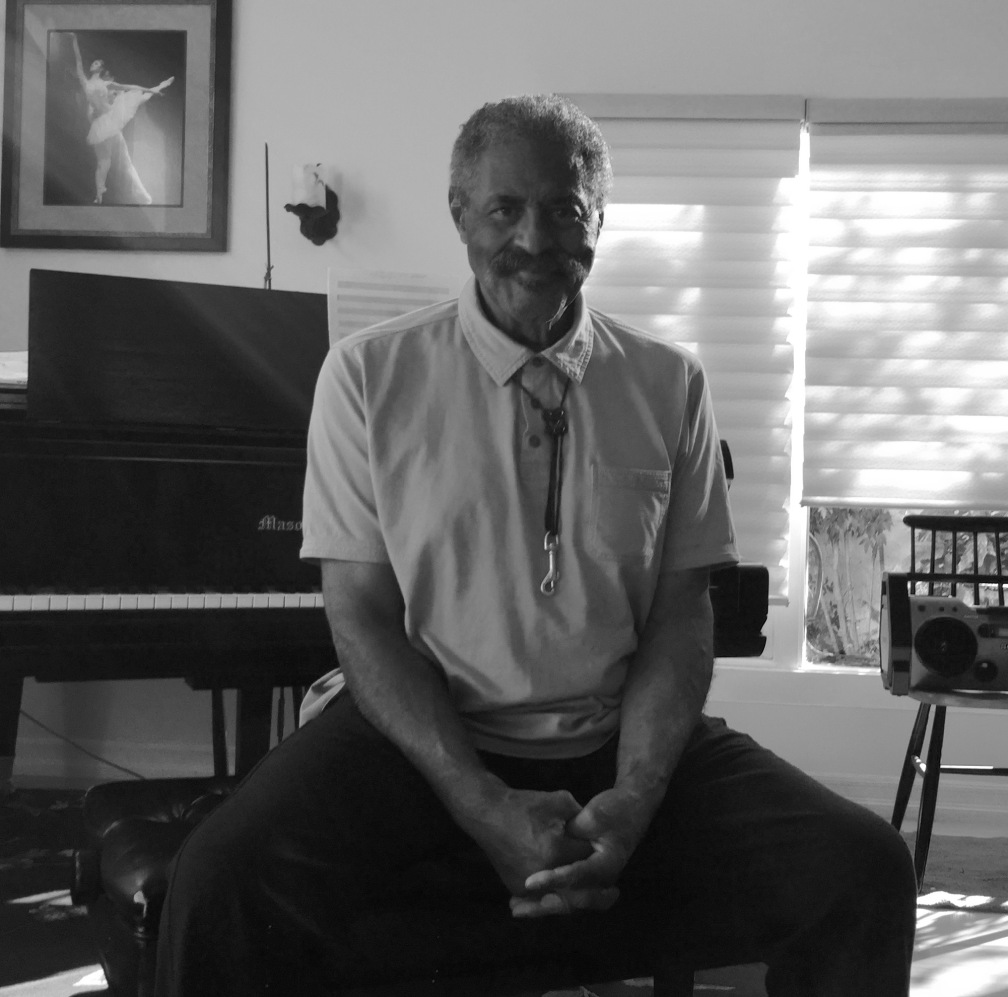
I’ve had two lessons with Charles McPherson when on tour in San
Diego. They have been utterly remarkable. The second one from last fall I
taped: Thanks to Charles for allowing this transcription to be
published on DTM.
This week Charles is playing at Dizzy’s Club Coca Cola Thursday
through Sunday. It is a must-see gig for lovers of the real bebop.
Charles McPherson: Time!
I’m talking about metronomic time. I’m not talking about aesthetic
time. Just plain academic time. 160 on the metronome is 160. There is no
subjectivity and there is no philosophy.
How you feel about 160: that’s dealing with nuance. How are you feeling in between the beat? That is the magic. That’s very, very subtle.
Many people think that how they commit to the metronomic beat is the only game in town. But in bebop, the game in between this beat and the next one is really the main game.
The gap between the beats is the moment of real creativity because once you do this [claps hands], it’s a done deal. The space before is the realm of thinking, possibility and the creative moment!
The real secret to improvising is to be alive in the space and not just alive here [claps hands].
We can look at the brain and you can see
what activity is working at the moment. Now to the average player and
even the good player too: if you could see brain activity, you’d see all
this activity at the downbeats but in between the gaps, it would
probably be flatline.There’s nothing going on and then all of a sudden there is activity again.
That ain’t right.
The improviser has to be totally alive
throughout the whole spectrum of a bar. Not just a downbeat of a bar, in
a micro beat way not just a macro beats.
All the “ups,” “ands” the “a’s.”If
you take a whole bar and split it up you have: whole notes, half notes
and dotted quarter notes, and quarter notes and eighth notes and
sixteenths. Now when you slice them up into all of these little pieces, I
say the consciousness of the improvising player should be very much
alive on all of these little beats.That means that one should be able to start a phrase on any of that and come out right down the pike.
There’s none of that, “I’m only alive when that next beat comes up…”
If I were to point to you and say “Play now!” you would be playing and you would have something to play.
Ethan Iverson:That reminds me of Charlie Parker.When you transcribe Charlie Parker you see he constantly stops and ends at different places.
CM:He does not care where he stops and most important is he does not care where he starts. That’s what is amazing.
EI: It comes from every corner.
CM:Yeah, he can start from any spot and connect it down the pike.He’s
like a drunk man who is on a tight rope. He never falls. The accents
make you feel like he could never come out right and he does. All the
time. He’ll start anywhere. It would be the “and of3”
in a proceeding bar and make all of the connections seamlessly. He
comes out right on chord tones and everything we know for melodic logic
to happen.
This is what I mean. He is alive. He is
not flatlining anywhere. Now that is some real freedom. That is some
serious rhythmic freedom and some serious harmonic freedom and some
serious melodic freedom. (That’s the Holy Trinity of Music: melody,
harmony, and rhythm.)
The bebop part of it is this:The best of them knew how to navigate through harmonic movement and connect stuff seamlessly. It did not have to be modal orpentatonic.
They could do it with eight notes and they could do it with sixteenth notes.
EI:What about triplets?
CM:Triplets create a rhythmic connection that is good for the eighth notes.It
actually creates a certain amount of rhythmic tension. The feeling of
three against four is an important feeling. Three and four going on at
the same time. When you employ triplets and then play eighth notes right
after that; it’s like you shot a bow and arrow.
A player should always have the balance
between tension and release in everything. It’s not all tension and not
all release, it’s the balance.
In rhythm there is supposed to be a
certain amount of stuff that is alluding to tension and release. The
balance is there, as opposed to rhythmically it being flat. You want
your phrase to sound like it got shot from a bow and arrow. (Not like
badminton!)
I’ve got a good way to practice this. You
play a whole solo with eighth note triplets and don’t do anything else.
At first it is going to be kind of funny to do. To play a triplet every
now and then is one thing, but to play 32 bars of eighth note triplets
is quite another thing.
You’ll find that in order to do that,
every time that you start a new phrase it’s got to be in the world of
triplet-ness. You’ll find that your vigil of where the one is and the
beat is totally a higher level of vigil then what it is if you say to
yourself“I can just play
eighth notes to this.” Because you are adhering to triplets and making
them a discipline, they draw forth from you a higher level of rhythmic
ability.
EI:Barry Harris and Billy Hart both talk about the word “upbeat.”
CM:That
means to be alive! Alive through the whole beat. One has to be at home
starting phrases on the upbeat and making them come out right. And to
have enough of that going on in four bar phrases.If
you do that, then that is supplying the tension. If you play something
on the upbeat, that is already tense, ’cause you’re doing something that
is unexpected and it’s not on a strong side of the beat. Just starting
there supplies tension from the get go.
A beat is a complete down and up. It’s the space in between. A lot of people just think a beat is just this [taps hand on table].Here it’s just flat line. There’s nothing there.Nobody lives there.You can play music that way but it’s not that snake stuff.
Even most jazz players don’t really live in the space more than the [taps hand on table]. We can talk about race; white and black. There is only a handful of players, black, white, Chinese,Man, Woman, green, yellow, purple that can really navigate like that.
So you have Elvin Jones and you got a young professional drummer.There’s a difference. They both play drums and they are both playing four-four.The
way that Elvin Jones is going to navigate these accents is totally
different from the young professional. Young professional is gonna play
it in a straight line. Which is good. That’s OK cause its gonna get you
there.
But Elvin is playing like Michael Jordan going down the court.Now
you can get down the court in a straight line, or you can go down the
court like Michael Jordan which means he is pivoting all over the place
in unexpected spots and faking people out. They thought he was doing
this, and he pivoted and did that. They are all over there on the floor
and he is over here making the basket.
We can equate Michael Jordan’s pivots
with the accents of a drummer. Elvin Jones is Michael Jordan. It’s not a
race thing, it’s a rhythm thing. There’s only a handful of people who
feel time like that. When you got that, it’s kind of like listening to
Tito Puente.
EI:Does the word “Clave” relate to bebop?
CM:I must admit that I don’t know enough about that music as I should.A lot of jazz people — including drummers — don’t know enough about that stuff.There’s a difference between 2-3 and 3-2 clave.When you play a gig with those cats and you mix that up,they will let you know right away.
I think most jazz is a particular version of the clave.I’m not sure which one.A lot of the heads, one of those works more than the other.
The thing about jazz and the way a
drummer functions in a jazz rhythm section; the way he is parlaying
accents and distributing them between his limbs is similar to a timbale
player. Instead of having one trap drummer, they have several drummers
taking care of certain things. Bongos are doing this, the congas are
doing something else…The trap drummer is a new invention and he is performing the function of several people.
EI:Charlie Parker could play with Mario Bauza because his rhythmic perception fit in with that situation.
CM:Rhythmically
what Charlie Parker did fits with anything. His syncopation and how he
is thinking about tension and release works perfectly with that kind of
music.
People play differently. Some hear things
more in a straight line. Charlie Parker represents the more serpentine
approach. Miles Davis, as great he is, sometimes is more straight.
There’s a good example with two different tunes. Miles Davis is the one who wrote “Donna Lee,”based off the changes of “Indiana.”It’s still a great tune, but it is not quite the same thing that Bird and Dizzy had at that time, it is a little more straight.
[Sings the melody to “Donna Lee.”]
It’s a long line of eighth notes.
OK, look at Charlie Parker’s tune.Any one of them …
[Sings “Moose the Mooche” and emphasizes the accents and the syncopation.]
Look at that…That’s Michael Jordan.
This ain’t Michael Jordan. It’s beautiful but not Jordan: [Sings “Donna Lee.”]
This is:[Sings a montuno.]
In Afro Cuban everything they are doing is that. The bass players are on the “and” of2 and the downbeat of four. They are never on one. It sounds like they are in seven and it’s just 2/4!
You listen to them and you say “Man what is that?” and they say,“Oh it’s just 6/8, 2/4 or 4/4.” It’s because where they are choosing to accent.
[Sings Charlie Parker blues “Bird Feathers.”]
If I did not put a melody to that and just played the rhythm to it, I’d sound like a great drummer.
You see when Bird wants to play with the Afro Cuban cats….Bird was already that.
He did not have to change anything.Can you imagine Miles playing with an Afro Cuban group?
EI:I guess Sonny Rollins was the guy.
CM:He was the closest. He was next. I don’t even know if Coltrane was quite like that.Trane’s
actually straighter. He was wonderful but he did not quite have the
corners. If he had the corners that Sonny Rollins had in 1957 and Sonny
Rollins had the harmony that Trane had…that’s the way you’d beat both of
them.
Could you imagine playing “Countdown” the way Sonny Rollins would have played “Countdown?”[Laughter] That’s a whole different kind of “Countdown.”
EI:Lester Young comes to mind: how did he link to Bird?
CM:Lester Young is the first Bird.No Lester Young, no Bird.
And Buster Smith.I have heard Billy Eckstine say that Bird was such an amalgamation of so many players that you can’t pick any of them out.It’s mixed up in there and he has his own thing and it came out the way it did.The
most notable stuff would be Lester Young and Buster Smith. I heard
Buster on a record and Bird really got a lot of stuff from him. That one
record that documents him, he was already an old man, but you can hear
how Bird comes from thatFrom what I heard there’s also Chu Berry and Coleman Hawkins and a lot of other people. Including Louis Armstrong.It’s all mishmashed and there Bird is.
EI:It seems to me Louis Armstrong has that “Michael Jordan” stuff.
CM:Yeah,
he did. He just did not play as many notes as Charlie Parker but the
accents are falling like that. Also there is the real gift of melody.
When a player plays, you have several choices within the chord.There are a few notes that are right and you have these choices but to eke out the best three or four, sequence-wise;that is what gift of melody is. There’s a difference between the right notes and the best notes.The best notes also have something to do with “when.” ‘Cause a note is a note.A D natural isD natural… but it being here as opposed to there and how it is phrased and the rhythm of it, makes all of the difference.
EI:You told me something last time about how the changes are there but you don’t play the changes.
CM: Yes!You’re
supposed to be thinking melodically. It’s not like the changes are
giving you anything. It’s the melody notes that you hear out of them.
You can’t be backwards with that.
Thirds are always melodic. In a way they
are the most melodic interval. Thirds are the beginning of creation.
Scales are just there, but thirds are melodic and harmonic.
If you navigate in thirds, getting to
chord tones by threading thirds in a million different combinations, you
will always be melodic, not just playing scales. For a beginning jazz
student, I might have them play a whole solo in thirds. It will stop
them from being too scalar.
[I sit at the piano for 20 minutes and
play along with Jamey Aebersold tracks of “All the Things You Are” and
“The Song is You.” Charles coaches me on adding triplets to my line,
playing the accents harder, laying back more on the beat.]
[We sit back down on the couch.]
CM: Think of the quarter
notes not as marching but as ice-skating. Elvin Jones said, “I don’t
think of 4/4, I think of 8/8…and the person who told me to think that
way was Charlie Parker.” Elvin told that to my son.
If you are subdividing, your beat is
wider. Also those subdivided beats become sentences you skate through,
not just four beats goose-stepping in a march.
Another metaphor: You want it to be tai-chi, not karate.
Even if it is fast, the real bebop players skate through it all.
There’s variety in everything. Another
thing you could practice is changing your touch at the piano depending
on the kind of phrase you are playing. It’s not “one size fits all.”
In the end, of course, it becomes organic. You forget about all the practice when you actually play a gig.
EI: The word “asymmetrical” might be important.
CM: Yes! Symmetry is
boring. Or, at least, “asymmetry” is the creative aspect of if. Some
people can really snake, can really be serpentine.
Some great players are really great but don’t have that snake. Barry Harris has it.
EI: Cedar Walton is a great bebop pianist but it’s not that asymmetrical.
CM: Right. I love Cedar but he’s not Barry or Bud Powell when it comes to that.
EI: Tommy Flanagan?
CM: Tommy is so
creative! Maybe even more creative than Barry. But he’s a little on top
with the beat. Barry is more right in the center.
The other guy who really has the beat
from Barry’s generation is Sonny Clark. They are really rare in a way,
digging into the time like that.
EI: Red Garland?
CM: Yeah, but Red —and
Wynton Kelly too…and Bill Evans too— they have a real dotted-quarter and
sixteenth kind of swing. Not when it gets real fast of course, but at
medium tempos there’s that kind of hiccup in the line. Barry, Sonny
Clark, Bud, Bird, Sonny Rollins, Trane: they play more like even eighth
notes, and that’s how I want to play too.
[Picks up his horn and demonstrates an exaggerated swing like Red and a smother eighth like Barry.]
EI: I guess if you are playing a more straight eighth note it can grind in a nice way against the implied triplet.
CM: Especially for horn
players, if you accent the upbeat note too much in the line, it can
shorten the second eight note into a sixteenth.
EI: Joshua Redman told
me something like that, that at lessons with beginning saxophonists he
usually had to tell them to stop trying to swing the second eighth too
much, that it was too herky-jerky.
CM: Exactly. I want to play more evenly, although still with the accents and placement of course.
One way to practice getting asymmetrical
is connecting the melody notes of a standard in surprising ways. Make
yourself get from there to here with creative inspiration. From any part
of the original melody, go! until the next part of the melody. The
highest example of that is Charlie Parker with Strings. They just
released some more alternate takes and it is just unbelievable, his
melodic inspiration. It doesn’t matter where he is in the melody, he
joins things together in new ways. That’s art!
[I didn’t think what Charles was
talking about was all that hard, but when he asked me to do it on “All
the Things You Are” and “The Song is You,” I found it essentially
impossible. This concept is now a regular part of my practice. John
Coltrane also really has this together: Listen to Trane’s melody
statement on any slow or medium tempo standard.]
EI: What about playing on modal music?
CM: With the modal concept you don’t need to change anything.
In fact, this is where rhythm really comes in. If you can play a lot of
syncopations, you will have a real advantage over a modal player who
doesn’t know that stuff. Same with playing thirds instead of scales.
After all, John Coltrane really digested
bebop before he played modal. In fact, we forget that he was only six
years younger than Charlie Parker. He was like a younger brother, seeing
all that stuff live. There’s even that photo of him looking at Bird.
Barry Harris doesn’t like modal music, but that doesn’t mean he couldn’t do it. If he wanted to, he certainly could.
EI: Ok, last question: What about the blues?
CM: The real vibe of the
blues — a slow blues, not an uptempo blues — is a state of reverence.
The Greeks had different words for different kinds of love. “Eros” is
sexual love.“Agape” is more how you feel about God.
In the blues, even though there’s plenty
of suggestive lyrics, the feeling underneath is more Agape. There’s a
longing towards God. You have to be in that kind of space to play the
blues well.
—
UPDATE: A year later: I took another lesson.
Charles talked to me about patterns a bit. According to Charles,
Charlie Parker didn’t play patterns, but Dizzy Gillespie did, simply
because when exploring in a fashion that makes complex harmony the base,
patterns are a logical way to elaborate the harmony. Charles said that
Dizzy Gillespie had a copy of Nicolas Slonimsky’s Thesaurus of Scales and Melodic Patterns
in the 1940s. (It was published in 1947, but most of us think of it
entering the jazz practice room with John Coltrane’s recommendation a
decade later).
Charles mentioned “Lover” as a good place to hear how Bird avoided
patterns. The harmony is all parallel, but Bird never plays sequences.
This is not true (at least not in the same way) when Coltrane plays
“Lover.” Tellingly, Bird starts with a major chord, Trane starts with a
II/V.
I wanted to hear Charles on “Lover,” and he stomped it off at
Coltrane’s fierce tempo but with a melodic purity that is closer to
Bird. Lynn McPherson caught the moment on video.
Charles
McPherson was born in Joplin, Missouri in 1939 and moved to Detroit at
age nine. While growing up in Detroit, he studied with the renowned
pianist Barry Harris and started playing jazz professionally at age 19.
He then moved from Detroit to New York in 1959 in order to be in the
heart of the jazz scene. McPherson soon joined bassist Charles Mingus’
band and performed with Mingus from 1960 to 1972. While performing with
Mingus, he collaborated frequently with Harris, Lonnie Hillyer, and
George Coleman. Mr. McPherson has performed at concerts and festivals
around the world with his own variety of groups, consisting of quartets,
quintets and full orchestras. Charles has toured the U.S., Europe,
Japan, Africa and South America with his own group, as well as with jazz
greats Barry Harris, Billy Eckstine, Lionel Hampton, Nat Adderly, Jay
McShann, Phil Woods, Wynton Marsalis, Tom Harrell, Randy Brecker, James
Moody, Dizzy Gillespie, and others. 16 years ago, Charles was featured
at Lincoln Center showcasing his original compositions, and once again
joined Wynton Marsalis and the J@LC Orchestra in April, 2019 in
celebrating the altoist’s 80th birthday. The evening’s performance
included new arrangements of 7 of Charles’ iconic, original
compositions. Finally, Charles performed in April, 2019 at the NEA Jazz
Master’s performance during Stanley Crouch’s tribute. McPherson has
recorded as a guest artist with Charlie Mingus, Barry Harris, Art
Farmer, Kenny Drew, Toshiko Akiyoshi, the Carnegie Hall Jazz Orchestra,
and the Lincoln Center Jazz Orchestra with Wynton Marsalis.
He has recorded as a leader on Prestige, Fantasy, Mainstream,
Discovery, Xanadu, Arabesque, Capri and several smaller labels in Europe
and Japan. Additionally, Charles was the featured alto saxophonist in
the Clint Eastwood film “Bird,” a biopic about Charlie Parker. Charles
has received numerous awards, including the prestigious Don Redman
Lifetime Achievement Award and an Honorary Doctor of Fine Arts from
California State University San Marcos. Widely recognized as a prolific
composer, Charles is now Resident Composer for the San Diego Ballet
where he has written three original suites plus two arrangements for
chamber music and jazz combos. His newest album on his own label is a
compilation of two of multiple movement suites, “Sweet Synergy Suite”
and “Song of Songs,” plus a movement from a string chamber work,
“Reflection, Turmoil & Hope.” Many critics from acclaimed
publications, including DownBeat Magazine, recognized JAZZ DANCE SUITES
as one of the best Jazz Recordings of the year. It’s also won the honor
of two International Reader’s Polls – both DownBeat and JAZZTIMES as #1
& #4 Jazz Album of the year, plus Charles was named Artist of the
Year.
Read all the reviews here. Charles was most touched by his peer’s comments.
Bobby Watson said, “A masterpiece.”
John Beasley and Don Sickler both said, “I had no idea you are such a great writer,” and many more too vast to add here.
In the summer of 2019, Dr. Donnie Norton began compiling the entire
book of Charles’ compositions for publication. During the pandemic,
Charles was as busy as ever online participating in programs, concerts
and festivals all over the world – from the esteemed Global Music
Foundation, Detroit Symphony Programs, many jazz festivals, and a new
recording coming up from Germany where he is a soloist, and artists in
residence programs from MSU to ASU. McPherson remains a strong, viable
force on the jazz scene today. Throughout his over six decades of being
an integral performer of the music, Charles has not merely remained true
to his Be Bop origins, but has expanded on them. Stanley Crouch says in
his New York Times article on Charles, “he is a singular voice who has
never sacrificed the fluidity of his melody making and is held in high
esteem by musicians both long seasoned and young.” Wynton Marsalis, a
longtime admirer says: “Charles is the very definition of excellence in
our music. He’s the definitive master on this instrument. He plays with
exceptional harmonic accuracy and sophistication. He performs
free-flowing, melodic and thematically developed solos with unbelievable
fire and an unparalleled depth of soul.” Charles is a frequent guest at
universities all over the world and also teaches privately. Many of his
former students have gone on to have careers of their own in jazz, and
have earned National Jazz Student Awards. Charles had the honor of being
the subject of then PhD candidate Dr. Donnie Norton’s Doctoral
Dissertation: “The Jazz Saxophone Style of Charles McPherson: An
Analysis through Biographical Examination and Solo Transcription,” and
is now being extensively interviewed by Dr. Michael Caldwell for a
memoir about Charles’ life and philosophies. numerous awards, including
the prestigious Don Redman.
Charles McPherson is an alto saxophonist who spent much of his early career under the spell of jazz great Charlie Parker,but who fired the Parker sound with his own intense energy and expressive skills. Championed by jazz writer Ira Gitler,
McPherson made a number of records for Prestige throughout the
mid-to-late 1960s, garnering generally good reviews and gaining notice
in a 1967 Downbeat critics‘ poll as "talent most deserving of wider recognition." But it was the era of the avant-garde, Miles Davis‘ second great quintet, and the emerging influence of rock. McPherson‘s bebop-steeped sound struck some as antiquated.
In a 1968 interview with Chris Albertson, McPherson
criticized his contemporaries, who 'segregated' themselves from certain
kinds of music. "I don‘t understand how cats can be my age and have
missed Bird," he said. "For instance, if a cat is studying psychology,
he‘s just got to read something about Freud. A musician must go way back
and listen to all of it, all kinds of music..not just jazz. All the
great cats did that; they knew no musical boundaries, they knew they
couldn‘t afford to be prejudiced." Citing his habit of listening to
everything from Louis Armstrong and Bessie Smith to Stravinsky and Bach,
McPherson said, "I learn from all of those cats, they all express
beauty. There are still some of us who really dig love and beauty."
Watch a recent interview with Charles McPherson:
Charles McPherson Interviews Parts 1-4 | "San Diego Profiles"
For more than 60 years, saxophonist Charles McPherson has been one of
the most expressive and highly regarded voices in jazz. His rich
musical style, rooted in the blues and bebop, has influenced and
inspired generations of musicians and listeners.
McPherson was
born in Joplin, MO, on July 24, 1939, and he developed a love for music
at a young age. As a child, he began experimenting at the piano whenever
one was available. He also attended summer concerts in Joplin that
featured territory bands from the Midwest and Southwest. These concerts
made a strong impression on McPherson, who was particularly enamored
with the sound and shape of the saxophone.
McPherson moved to
Detroit in 1948 at age 9. At that time, Detroit was home to one of the
most vibrant jazz communities in the country. His new home was in the
same neighborhood as his future mentor, pianist Barry Harris, as well as
his friend and future bandmate, trumpeter Lonnie Hillyer. Additionally,
McPherson now lived within blocks of the famed Blue Bird Inn jazz club.
“The
street that I lived on just happened to be a street where Barry Harris
lived right around the corner, five minutes away. A trumpet player named
Lonnie Hillyer, who worked with Mingus along with myself for a long
time, lived right on my street. And there was a jazz club a few blocks
down on my street called the Blue Bird, which was, at that time,
probably the hippest jazz club in Detroit. So it was interesting that,
of all places, as big as Detroit is, I ended up on the same street as a
really great local jazz club. The house band at that time was Barry
Harris on piano, Pepper Adams playing baritone sax, Paul Chambers or
Beans Richardson (on bass), and Elvin Jones was the house drummer.”
NYC
Aug1962 After beginning on flugelhorn and trumpet in his school band at
age 12, McPherson switched to alto saxophone at 13. Much of his
knowledge of jazz at that point was from an awareness of popular big
bands of the Swing Era. He was also familiar with great soloists from
that time, such as alto saxophonist Johnny Hodges. Based on the
recommendation of a classmate, McPherson first heard the music of
Charlie Parker in his early teens. Despite not having a strong
theoretical knowledge of this new music, he knew immediately that bebop
was the style he wanted to play.
“One day I was in a little candy store, and there was a
jukebox with records in it, and I saw Charlie Parker. And I was like
‘Oh! Let me put my money in and hear this guy!’ And when I heard that
(“Tico-Tico” from Charlie Parker South of the Border), I was completely
floored. I was 13 or 14 years old, and from that point on, it was like
‘that’s it.’ And I knew nothing about changes or chords, and I’m just a
kid. I knew immediately that this is the way you’re supposed to play.”
From
then on, McPherson immersed himself in the jazz culture of Detroit,
modeling his musical style and training after the great musicians in his
midst. At age 15, he began to study with Barry Harris, in addition to
briefly studying saxophone at the Larry Teal School of Music in Detroit.
McPherson also started to practice and perform with other future jazz
luminaries within his peer group, including Hillyer, Roy Brooks, Donald
Walden, and Louis Hayes, as well as future Motown legends and members of
the Motown house rhythm section, bassist James Jamerson and drummer
Richard “Pistol” Allen.
“What we had to do was pool our money
together…and we rented a loft. We had seven or eight keys, and at any
time of night, anybody could go in and play. There was a drum set there
and a piano there…and it was in a neighborhood that was a business
district where, after hours, nobody was there. So we could go in at 2
o’clock in the morning and have a session. And this is what we had to do
in order to play, because (otherwise) we couldn’t play with those
(older) cats.”
By age 19, McPherson had advanced to the point
where he was working regularly throughout Detroit. He soon joined a
number of his contemporaries in moving from Detroit to New York in the
late 1950s. After moving to New York in 1959, McPherson began his
association with Charles Mingus, which lasted for the next 12 years.
In
the mid-1960s, McPherson began to record more frequently with other
musicians, including Harris and trumpeter Art Farmer. McPherson’s first
recording as a leader, Bebop Revisited, was made in 1964 and featured
Carmell Jones on trumpet, Barry Harris on piano, Nelson Boyd on bass,
and Albert “Tootie” Heath on drums. Later in the decade, McPherson
starting working more with his own groups, which also included Harris,
as well as tenor saxophonist George Coleman, who had recently finished
his tenure as a member of Miles Davis’s band.
By 1972, McPherson
stopped playing with Mingus and continued to tour and record as a leader
and as a sideman. He moved to San Diego in 1978, and since then he has
maintained an active career as a performer and educator throughout the
United States and abroad. In 1988, McPherson was featured in the
soundtrack to the Clint Eastwood film Bird as the saxophone voice of
Charlie Parker in several scenes. He has performed on over 70 recordings
to date, both as a leader and as a sideman. One of his most recent
recordings, Love Walked In, featuring Bruce Barth on piano, Jeremy Brown
on bass, and Stephen Keogh on drums was released in February 2016.
Additionally, in 2017, McPherson was interviewed for the upcoming
documentary Artists of Jazz, featuring other legendary jazz musicians
“whose careers played an integral part in the history of jazz.” In
September 2020, his newest recording, Charles McPherson's Jazz Dance
Suites will be released under his own label, ChazzMackMusic. A
culmination of 5 years of commissioned work with the San Diego Ballet,
it includes two full original suites: "Song of Songs" and "Sweet Synergy
Suite", plus more. Recorded at Van Gelder Studio with Terell Stafford -
trumpet, Randy Porter and Jeb Patton - piano, Lorraine Castellanos -
voice, Billy Drummond - drums, Yotam Silberstein - guitar, and David
Wong - bass. BebopSpokenHere (UK) says, "I doubt there will be a better
album released this year.."
McPherson has toured throughout the
United States, Europe, Africa, South America, and Japan. In addition to
the artists mentioned above, McPherson has performed and/or recorded
with many other jazz greats, including Pepper Adams, Nat Adderley,
Toshiko Akiyoshi, Randy Brecker, Jaki Byard, the Carnegie Hall Jazz
Band, Ron Carter, Paul Chambers, Alan Dawson, Kenny Dorham, Kenny Drew,
Billy Eckstine, Tommy Flanagan, Lionel Hampton, Tom Harrell, Billy
Higgins, Sam Jones, Clifford Jordan, Duke Jordan, Brian Lynch, Wynton
Marsalis, and twice with the Lincoln Center Jazz Orchestra, Pat Martino,
Cecil McBee, Jay McShann, Mulgrew Miller, James Moody, Dannie Richmond,
Red Rodney, Cedar Walton, Phil Woods, Snooky Young, and many others.
McPherson
is also an active composer. His most recent large-scale works, Sweet
Synergy Suite, Song of Songs, Reflection Turmoil & Hope, plus two
medleys, are the product of a grant from the San Diego Foundation’s
Creative Catalyst Fund, and private donors. The works have created a new
series for San Diego Ballet with ballet and modern dance styles,
featuring music by McPherson and choreography by Javier Velasco.
McPherson was named Resident Composer for the San Diego Ballet. In this
position, he will continue to collaborate with Velasco in creating
innovative new works for the company.
In addition to being a
performer and composer, McPherson is a respected and in-demand educator.
In 2014, he was a guest coach with the Juilliard Jazz Artist Diploma
Ensemble. He has been a clinician at countless other high schools,
colleges, and universities in the United States and throughout the
world, including the Amsterdam Conservatory, California State University
at Bakersfield, California State University at Northridge, California
State University at San Marcos, The Hartt School at the University of
Hartford, New Jersey State University, the New School, Northern Illinois
University, the Royal Academy of Music (London), San Diego State
University, Stanford University, SUNY Purchase, Temple University, the
Thelonious Monk Institute at UCLA, the University of California at San
Diego, the University of North Texas, the University of Northern
Colorado, and the Wisconsin Conservatory of Music.
In May 2015,
McPherson was awarded an honorary Doctor of Fine Arts degree from
California State University at San Marcos for “his outstanding
professional and creative accomplishments and his influential role in
mentoring future generations of musical artists.” In June 2016, he was
joined by drummer Albert “Tootie” Heath in receiving the Don Redman Jazz
Heritage Award, which is given annually to “legends of jazz whose
musicianship, humanity and dignity serve as an asset to jazz in the
tradition of Don Redman, and whose work in music and education
illuminates his spirit.” In 2017, McPherson was the recipient of “The
Duke” Award from Soka University, recognizing his lifetime of achieving
“longstanding artistic excellence, the victory of musical power and
beauty fostered with the tenacity of intelligent endurance.” After a
Jazz at Lincoln Center tribute featuring Charles' 80 birthday in 2019,
Wynton Marsalis says of Charles, "Charles is the very definition of
excellence in our music. He’s the definitive master on his instrument.
He plays with exceptional harmonic accuracy and sophistication. He
performs free-flowing, melodic, and thematically developed solos with
unbelievable fire and an unparalleled depth of soul.”
McPherson
currently lives in San Diego with his wife, Lynn, and he maintains an
active schedule of performing, recording, composing, and teaching. He
remains a respected and powerful force in jazz, and he is still “very
much in love with the saxophone and music.”
Alto saxophonist Charles McPherson‘s distinctive
musical personality is rooted in bebop, bluesiness with a bouncy and
vibrant gait. It slithers and weaves – making it an effective complement
for dance. Jazz Dance Suites was inspired by and dedicated to his daughter, Camille, a soloist in the San Diego Ballet. Two works – Song of Songs and Sweet Synergy Suite – comprise most of the album which also includes a six-minute piece entitled Reflection on an Election which is a response to the 2016 American election. Read this full review here.
More than a half–century
into his professional career, alto saxophonist Charles McPherson remains
a potent creative voice in jazz. McPherson logged an epic twelve–year
run with the Charles Mingus group (1960–1972) and has released some 25
albums as a leader including Live at the Five Spot (Prestige, 1966) and First Flight Out(Arabesque, 1994). In 1988, McPherson was the featured alto player on the soundtrack of Clint Eastwood’s filmBird. Reviewing his 2015 CD The Journey for
AllAboutJazz.com, Robert Bush wrote: “Alto saxophone legend Charles
McPherson has few living peers, but even at the age of 75, he shows no
signs of slowing down…Blistering post–bop remains McPherson’s signature,
but there is also a modernist streak that ripples through his
improvising on this disc that can only be heard in terms of things that
tingle the spine.”
Charles McPherson is a living legend, one of the all-time greats of bebop, post=bob, and the alto saxophone.
He also happens to be one of the world’s great educators, connecting
deeply with students at SJW over the years, and providing a tremendous
inspiration for their musical development, and a positive influence in
their lives in general.
Connecting with Charles is one of the best things you can do for your
own growth as a musician, and we invite you to do so this summer at
Jazz Institute!
Charles was born in Joplin, Missouri but grew up in Detroit,
Michigan, where he studied with the renowned pianist Barry Harris and
started playing jazz professionally at age 19. He moved from Detroit to
New York in 1959 and performed with Charles Mingus from 1960 to 1972.
While performing with Mingus, he collaborated frequently with Harris,
trumpeter Lonnie Hillyer, and tenor saxophonist George Coleman.
Charles has performed at concerts and festivals with his own variety
of groups, consisting of quartets, quintets to full orchestras. He has
toured the U.S., Europe, Japan, Africa and South America with his own
group, as well as with jazz greats Barry Harris, Billy Eckstine, Lionel
Hampton, Nat Adderly, Jay McShann, Phil Woods, Wynton Marsalis, Tom
Harrell, Randy Brecker, James Moody, Dizzy Gillespie, and others.
He has recorded as guest artist with Charlie Mingus, Barry Harris,
Art Farmer, Kenny Drew, Toshiko Akiyoshi, the Carnegie Hall Jazz
Orchestra, and the Lincoln Center Jazz Orchestra with Wynton Marsalis.
He has recorded as leader on Prestige, Fantasy, Mainstream, Discovery,
Xanadu, and most recently Arabesque. Charles was also the featured alto
saxophonist in the Clint Eastwood film “Bird,” a biography about Charlie
Parker.
Charles remains a strong, viable force on the jazz scene today. He is
at the height of his powers. His playing combines passionate feeling
with intricate patterns of improvisation. Throughout his five decades of
being an integral performer of the music, Charles has not merely
remained true to his bebop origins, but has expanded on them. Stanley
Crouch says in his New York Times article on Charles, “He is a singular
voice who has never sacrificed the fluidity of his melody making and is
held in high esteem by musicians both long seasoned and young.”
THE
MUSIC OF CHARLES MCPHERSON: AN EXTENSIVE VIDEO OVERVIEW, A CROSS SECTION OF
RECORDINGS, MUSICAL ANALYSIS AND COMMENTARY, PLUS VARIOUS INTERVIEWS
WITH CHARLES MCPHERSON
Kofi Natambu, editor of and contributor to Sound Projections, is a writer, poet, cultural critic, and political journalist whose poetry, essays, criticism, reviews, and journalism have appeared in many literary magazines, journals, newspapers, and anthologies. He has written extensively about music as a critic and historian for many publications, including the Black Scholar, Downbeat, Solid Ground: A New World Journal, Detroit Metro Times, KONCH, the Panopticon Review,Black Renaissance Noire, the Village Voice, the City Sun (NYC), the Poetry Project Newsletter (NYC), and the African American Review. He is the author of a biography Malcolm X: His Life & Work (Alpha Books) and two books of poetry: The Melody Never Stops (Past Tents Press) and Intervals (Post Aesthetic Press). He was the founder and editor of Solid Ground: A New World Journal, a national quarterly magazine of the arts, culture, and politics and the editor of a literary anthology Nostalgia for the Present (Post Aesthetic Press). Natambu has read his work throughout the country and given many lectures and workshops at academic and arts institutions. He has taught American literature, literary theory and criticism, cultural history and criticism, film studies, political science, creative writing, philosophy, critical theory, and music history and criticism (Jazz, Blues, R&B, Hip Hop) at many universities and colleges. He was also a curator in the Education Department of Detroit’s Museum of African American History. Born in Detroit, Michigan, Natambu currently lives in Berkeley, California with his wife Chuleenan.

 TERENCE BLANCHARD